


Architecture and Heritage of the Castillo Pío Nono at Funicular Santiago
Visitors to Funicular Santiago are often surprised even before the ride begins. Its main entrance is marked by a medieval-style building: the Castillo Pío Nono, one of the most iconic structures on Cerro San Cristóbal and a true gateway into the history of Parque Metropolitano.
More than a century old, this building not only houses Funicular Santiago's base station, but also represents one of the main heritage elements of the architectural complex that made Funicular Santiago a National Historic Monument.
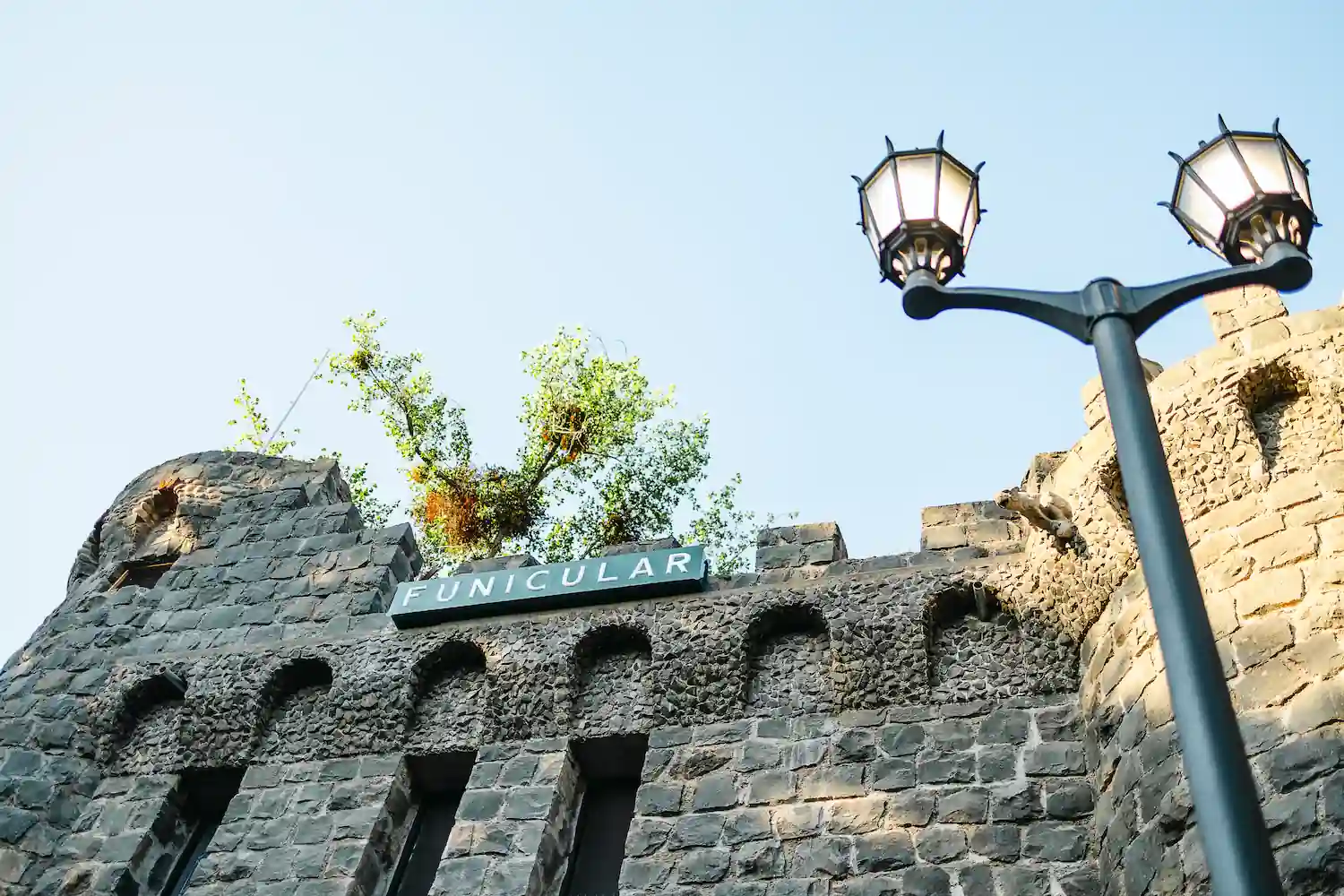
A castle in the heart of Santiago
Located at Pío Nono 450, Providencia, the Castillo Pío Nono was built as part of Funicular Santiago's original project during the 1920s.
Its design aimed to give a unique identity to the Funicular's main entrance, drawing inspiration from European castle architecture, with elements evoking medieval fortresses that, to this day, make it one of the most photographed buildings on Cerro San Cristóbal.
More than a station, the Castillo Pío Nono was conceived as a true portal into Chile's main urban park.
Architecture with identity: Luciano Kulczewski's stamp on Cerro San Cristóbal
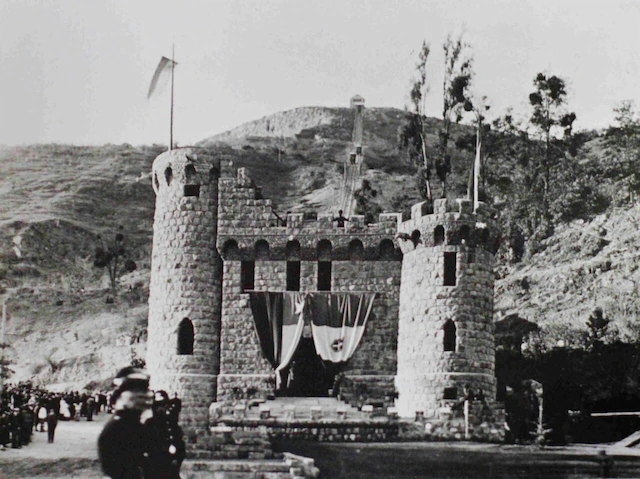
The Castillo Pío Nono was designed by the renowned Chilean architect Luciano Kulczewski, one of the most influential figures in Chilean architecture during the first half of the 20th century and the author of numerous iconic buildings in Santiago. Besides the Funicular's entrance, he also took part in designing other spaces within Parque Metropolitano, such as the former Casino Cumbre and the Casa de las Arañas.
True to his style, Kulczewski created a building that blends neo-medieval, Gothic and Art Nouveau influences, achieving a unique work that, more than a century later, remains one of the most recognizable buildings on Cerro San Cristóbal.
Its distinctive silhouette resembles a small European castle thanks to elements such as:
- The medieval tower crowning the main façade.
- Walls built with hewn stone extracted from Cerro San Cristóbal itself.
- Large entrance arches.
- Battlements and decorative details inspired by medieval fortresses.
Beyond its aesthetic value, the Castillo Pío Nono was conceived as a true gateway into Parque Metropolitano. Its design aimed to turn the start of the ride into a memorable experience, reinforcing the recreational and touristic character that Cerro San Cristóbal was beginning to take on during the 1920s.
Today, this station remains one of the best examples of Luciano Kulczewski's architectural legacy and one of the most photographed heritage works in Santiago.
The gateway to Funicular Santiago
The Castillo Pío Nono welcomes Funicular Santiago's visitors. This is where the journey begins for the traditional cars that climb about 500 meters up to Estación Cumbre.
Along the way you can enjoy panoramic views of Santiago while reliving an experience that has accompanied millions of people since 1925.
For this reason, the Castillo is inseparable from the history and identity of the Funicular.
Heritage and Historic Monument
When Funicular Santiago was declared a National Historic Monument in 2000, the heritage protection also covered its stations, railway infrastructure, machinery and associated buildings, including the Castillo Pío Nono.
Thanks to this protection, it's now possible to preserve one of the most representative examples of recreational architecture developed in Santiago during the first half of the 20th century.
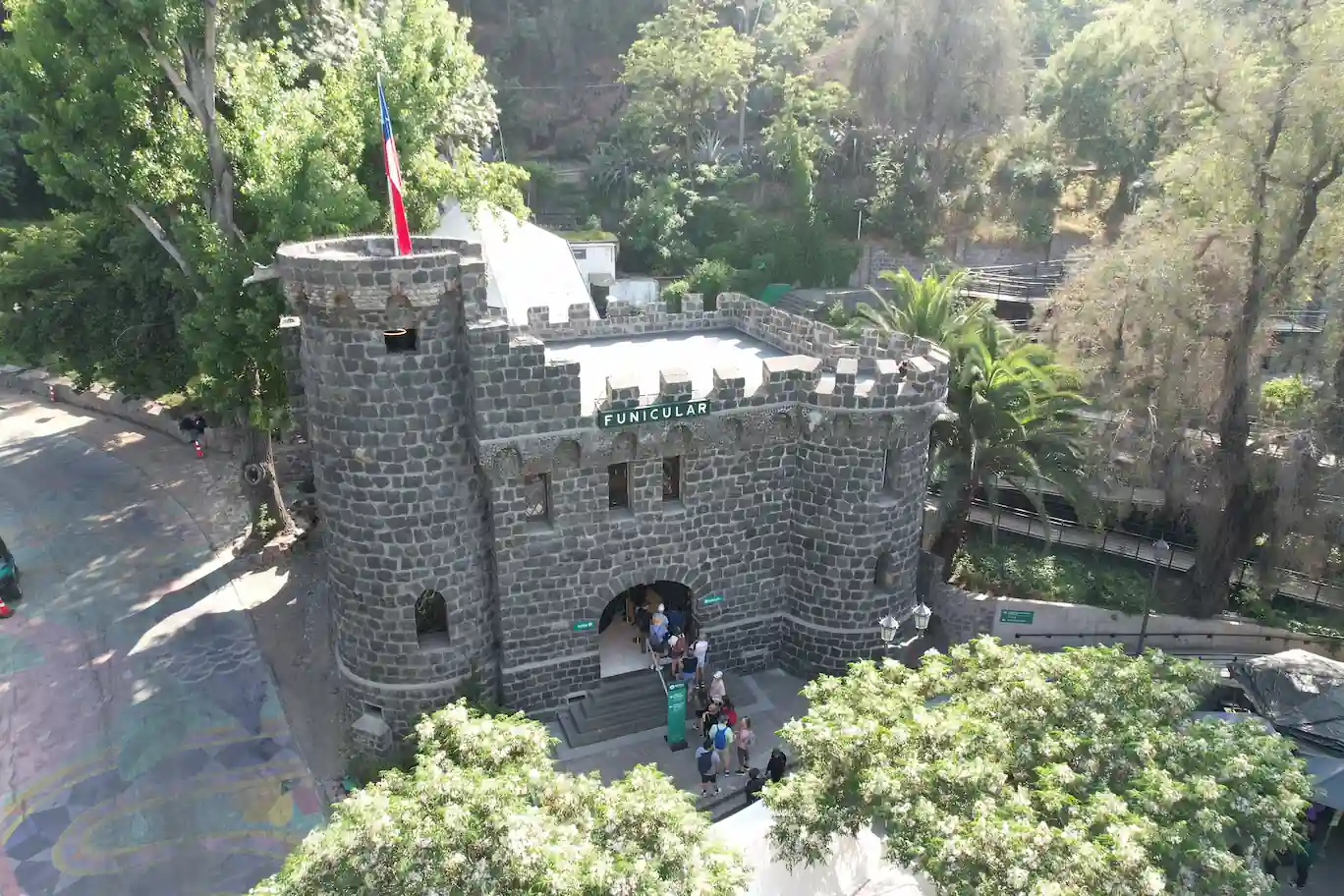
Why visit the Castillo Pío Nono?
Although many visitors arrive only thinking about riding the Funicular, the Castillo Pío Nono is an attraction in its own right.
It's one of the most iconic heritage buildings on Cerro San Cristóbal and part of Funicular Santiago's National Historic Monument status, preserving its original architecture.
It's one of the favorite spots for photos before starting the Funicular ride, since it's the starting point of one of Santiago's most traditional tourist experiences.
For more than a hundred years, the Castillo Pío Nono has been the gateway for millions of people who have chosen to discover Cerro San Cristóbal by way of Funicular Santiago.
Its architecture, its history and its heritage value make it much more than a station: it's one of the great symbols of Parque Metropolitano and a place worth admiring even before starting the journey to the top.


