


History of Funicular Santiago: more than 100 years connecting Santiago with Cerro San Cristóbal
The history of Funicular Santiago is also part of the history of Chile's capital. For more than a century, this iconic mode of transportation has carried millions of people to the top of Cerro San Cristóbal, becoming one of the main symbols of Parque Metropolitano and of Chilean heritage.
Its nearly 500-meter route doesn't just connect Pío Nono Station with Estación Cumbre — it also connects different generations who have enjoyed one of the capital's most traditional experiences.
Below, we go through the main milestones that have shaped the history of Funicular Santiago.
1923: construction of the Funicular begins
The Funicular's history begins on November 24, 1923, with the cornerstone-laying ceremony at Plaza Caupolicán, next to what is now Estación Pío Nono.
The project was part of an ambitious plan to turn the hill, until then used as a quarry, into a public space for sports, recreation and connecting with nature. Intendant Alberto Mackenna was one of the main driving forces behind turning Cerro San Cristóbal into a great urban park.
The cars and much of the technology used were built by the Italian company Ceretti e Tanfani, in Milan, specifically for this project.
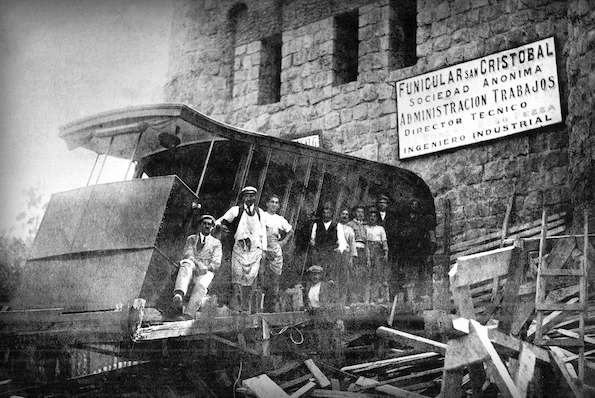
1925: the opening of a new icon of Santiago
On April 25, 1925, Funicular Santiago was officially inaugurated with President Arturo Alessandri Palma in attendance. The occasion was celebrated with a dinner at the summit of the hill, at Salón Tudor. The starting station was decorated with Chilean and Italian flags to celebrate both nations' cooperation on the project.
From that day on, it began carrying visitors to the top of Cerro San Cristóbal, making it easier to reach one of the city's main recreational spots.
In its early years, the ride took about 15 minutes and the cars had room for 50 people, with separate first- and second-class sections, a common feature of the era.
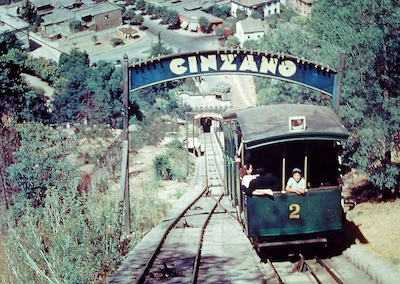
1968: renovation of the cars
Over the years, the Funicular adapted to new operating and safety needs.
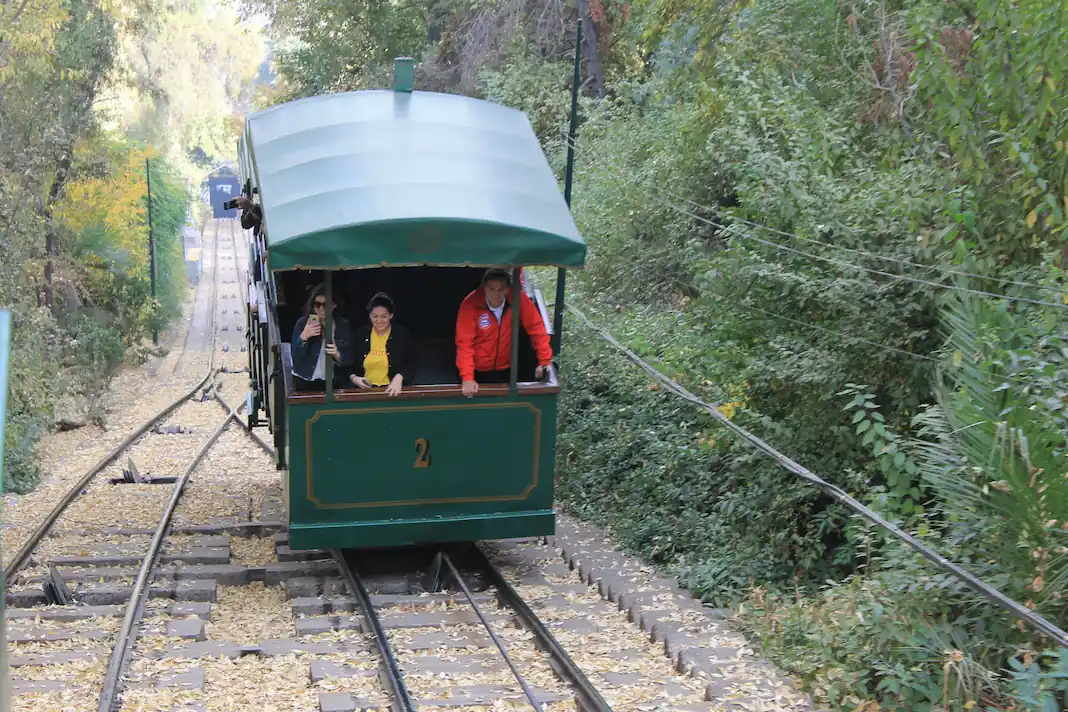
In 1968, the original cars were remodeled, replacing the wooden roof with a steel-and-canvas structure very similar to what they kept for the following decades.
1987: the visit of Pope John Paul II
One of the most memorable moments in the Funicular's history took place during Pope John Paul II's visit to Chile.
In April 1987, the Pontiff used Funicular Santiago to reach Cerro San Cristóbal and visit the Sanctuary of the Immaculate Conception, where he blessed Santiago with a message of love and peace for the Chilean people.
An event that stands as one of the most important milestones in the history of this historic mode of transportation. Today there's a commemorative plaque in the very car Pope John Paul II rode.
2000: declared a National Historic Monument
On November 16, 2000, Funicular Santiago, along with its stations and infrastructure, was declared a National Historic Monument.
This recognition highlighted its architectural importance as a heritage element of Santiago and the value of its complex cable transportation system.
It cemented its place as one of the most representative cultural assets of Santiago and Parque Metropolitano, present in the collective memory of its residents.
2022: a restoration for the future
After nearly a hundred years in operation, between 2020 and 2022 the Funicular underwent an in-depth conservation and maintenance process that preserved its historic value and prepared it for future generations.
The goal was to maintain high standards of safety, accessibility and rider experience, so a full review and maintenance process was carried out on Funicular Santiago's cars and stations.
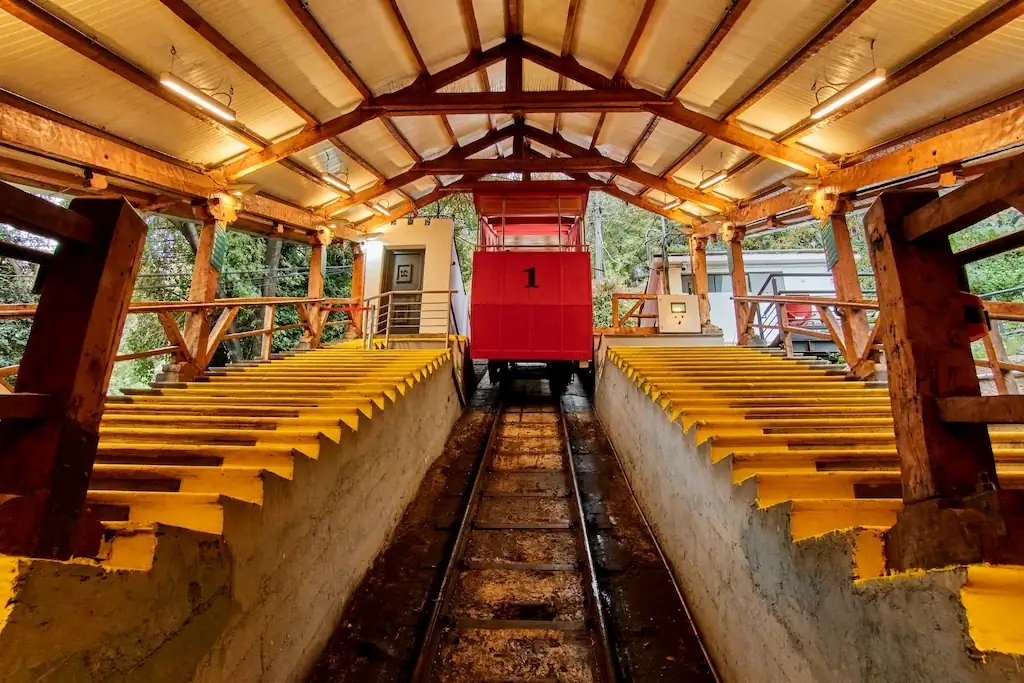
Among the most visible changes, the cars returned to their original red color and the roof was replaced with glass, offering an incredible panoramic view during the ride.
After two years of work, the Funicular reopened to the public on July 22, 2022, beginning a new chapter in its history.
A century of history that keeps moving
Today, Funicular Santiago keeps much of its original operation alive. Its historic machine room remains the heart of the system, and many of its original structures have been carefully preserved to protect its heritage value.
Every ride represents much more than a trip to the top of Cerro San Cristóbal: it's a chance to experience a feat of engineering that has been part of Santiago's transformation for more than a hundred years.
Timeline of Funicular Santiago
- 1923: Cornerstone ceremony and start of construction.
- 1925: Official opening of Funicular Santiago.
- 1968: Remodeling of the cars and renovation of their roofs.
- 1987: Pope John Paul II rides the Funicular during his visit to Chile.
- 2000: Declared a National Historic Monument.
- 2022: Completes its full restoration and reopens to the public.
A journey through Santiago's history
Few attractions in Chile can tell a story as long as Funicular Santiago's. From its construction more than a century ago to its restoration for future generations, it has witnessed the city's growth and millions of stories lived on Cerro San Cristóbal.
Today it continues inviting new visitors to travel the same path that generations of Santiago residents have traveled, turning every ride into an encounter with history, heritage and one of the capital's most iconic postcards.
If you'd like to visit, you can find more information and tickets here.


