


What is Funicular Santiago: find out how this historic mode of transportation works
If you've ever wondered what Funicular Santiago is or how a funicular works, here you'll find the answer. Located on Cerro San Cristóbal, this historic cable transportation system has carried thousands of visitors for more than a century, becoming one of Santiago's leading tourist and heritage icons.
More than just a way to get up the hill, the Funicular offers a unique experience that combines history, engineering, nature and some of the city's best panoramic views.
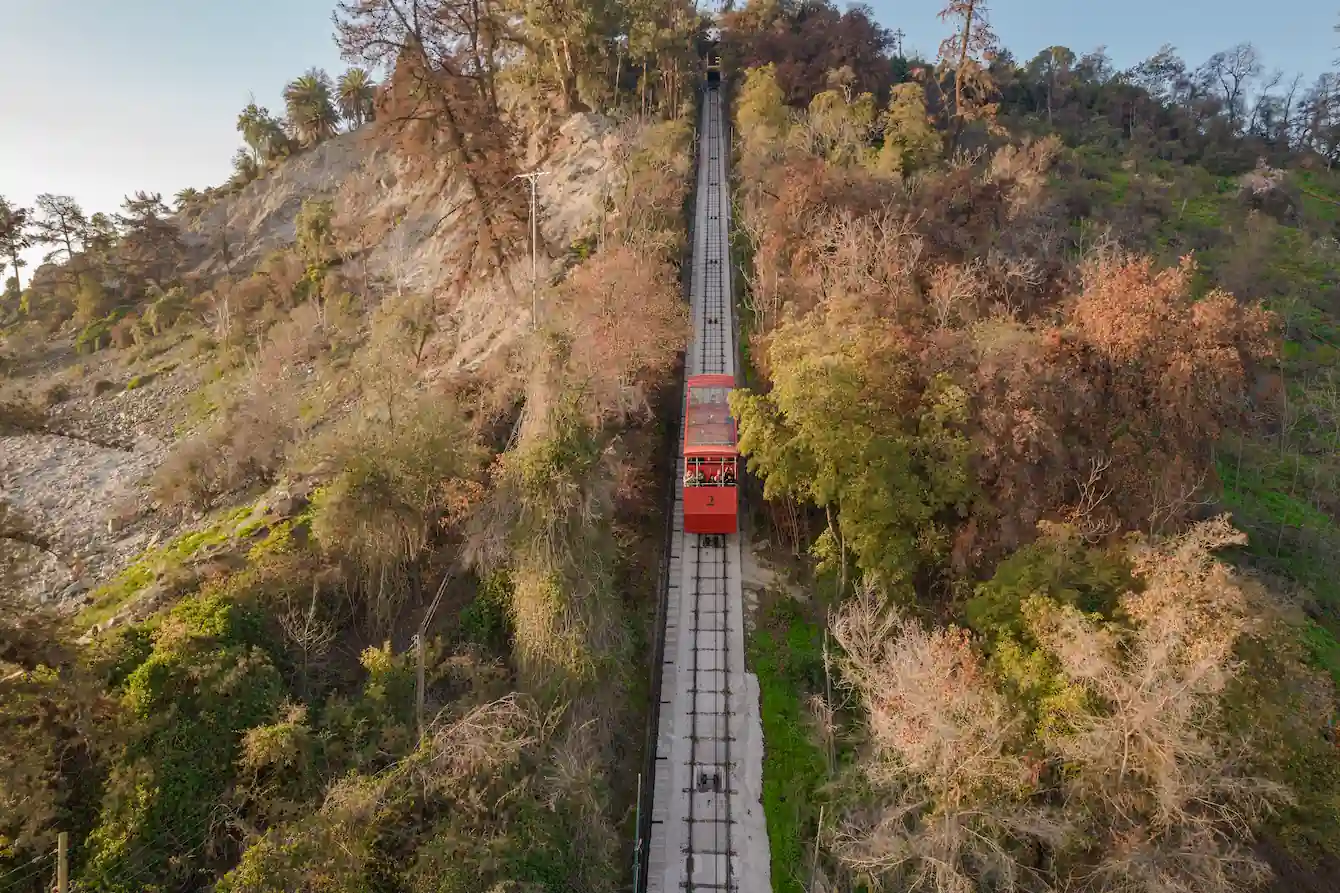
What is a funicular?
A funicular is a railway transportation system designed to travel steep slopes. It works with two cars connected by a steel cable: as one goes up, the other comes down, balancing the weight and making the ride efficient and safe.
Thanks to this mechanism, funiculars can overcome inclines that would be difficult for a conventional train, making them an ideal solution for hills and mountains.
Funiculars currently exist in various cities around the world, many of them considered major tourist attractions for their history and the scenery they offer along the way.
What is Funicular Santiago?
Funicular Santiago is the historic transportation system that connects Pío Nono Station with Estación Cumbre on Cerro San Cristóbal, crossing part of Santiago's Parque Metropolitano.
Opened in 1925, it was built to make it easier for visitors to reach the hill and quickly became one of the city's symbols.
Today it continues operating following a major restoration process that preserved its heritage value while incorporating current safety and operating standards.
How does Funicular Santiago work?
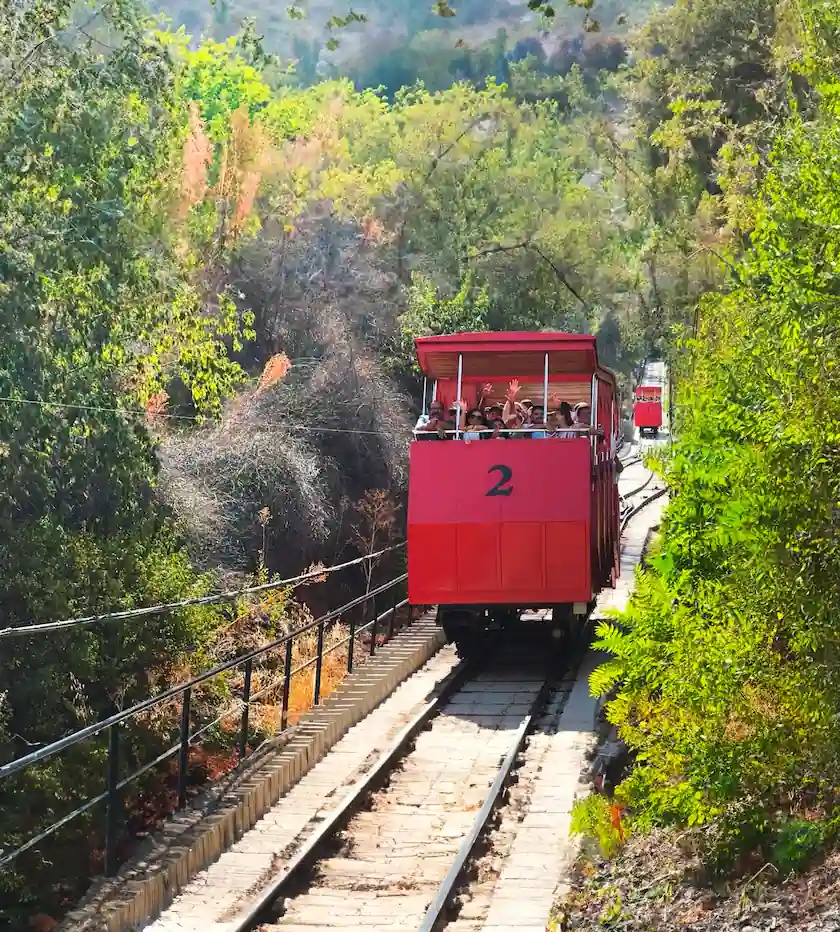
Funicular Santiago's operation is based on a cable traction system.
Two cars are connected by a steel cable that runs over a large pulley located at the top of the route. When one car goes up, the other comes down at the same time, using the balance between the two to complete the trip efficiently.
The Funicular climbs to the summit, covering about 500 meters up the hillside in a ride of around 7-10 minutes.
This system has proven to be a safe and reliable solution for decades, carrying hundreds of visitors who explore Cerro San Cristóbal every day.
Today, Funicular Santiago runs on its original system, which has received periodic maintenance and restoration work over time, mainly on the cars.
Why visit Funicular Santiago?
Funicular Santiago is part of the capital's historic heritage and one of Chile's most recognized tourist modes of transportation.
Beyond being a mode of transportation, the Funicular is an experience that's part of Santiago's history. Its blend of heritage, engineering and nature makes it a unique experience for tourists and residents alike.
Its panoramic views are a must-see in the capital. It's also a National Historic Monument for its importance and contribution to Chilean heritage.
From Estación Cumbre you can connect with Teleférico Santiago and discover Parque Metropolitano's attractions such as Terraza Bellavista, Café Tudor, the Sanctuary of the Immaculate Conception, the Manuel Foster Observatory, and more.
For a hundred years it has carried millions of people to the top of Cerro San Cristóbal to enjoy its viewpoints, green areas and cultural spaces.
Today it remains one of the favorite outings for families, local residents and foreign tourists alike.
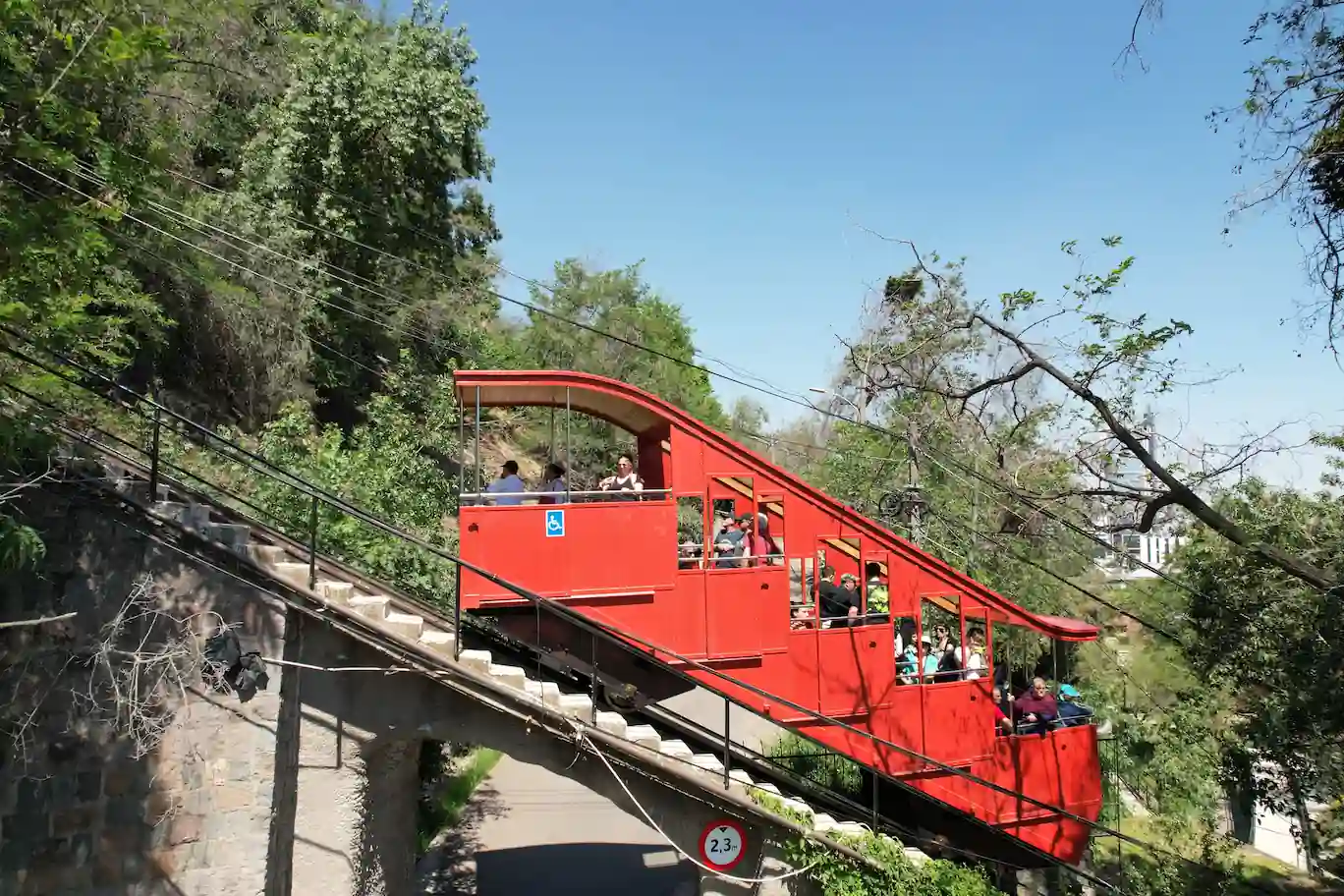
Fun facts about Funicular Santiago
There are several facts that make Funicular Santiago unique:
- It opened in 1925.
- It's one of the most traditional funiculars in South America.
- It runs through part of Parque Metropolitano, the largest urban park in Chile and Latin America.
- Its cars keep the historic feel that characterizes this heritage transportation system.
- It's considered one of Santiago's main tourist attractions.
Live the Funicular Santiago experience
Funicular Santiago is much more than a mode of transportation: it's part of the city's history and one of the most traditional ways to discover Cerro San Cristóbal.
If you're visiting Santiago, riding this historic funicular is a chance to get up close with a national heritage icon while enjoying scenery, nature and some of the capital's best viewpoints.
Buy your tickets here.


